
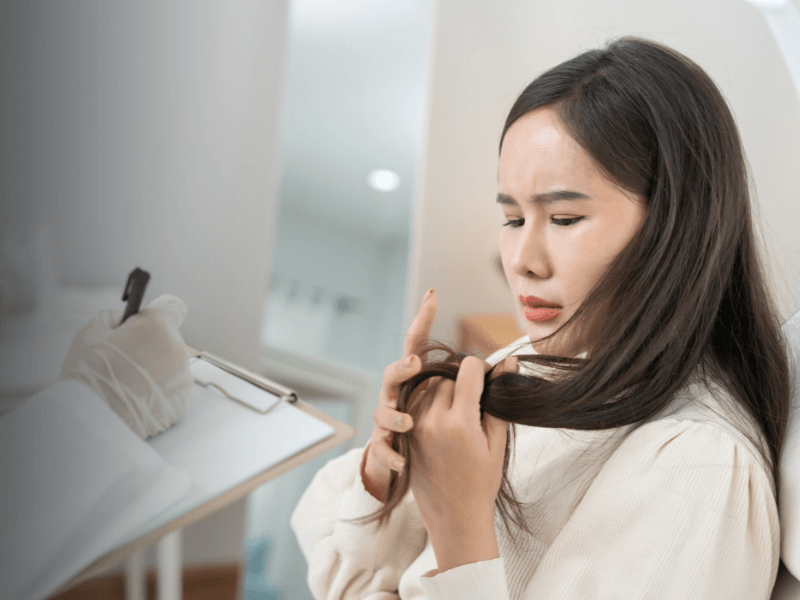
Hair loss can be emotionally distressing. Whether you’re noticing excessive shedding in the shower, thinning at the crown, or a widening part line, hair loss often feels sudden, confusing, and personal. While genetics, aging, and styling practices play a role, hormonal imbalances—especially involving the thyroid and adrenal glands—are among the most overlooked medical causes of hair loss.
At Florida Endocrinology and Diabetes Center, we frequently see patients who have tried shampoos, supplements, and cosmetic treatments with little success—only to later discover an underlying endocrine issue. Understanding how your hormones influence hair growth is a critical first step toward effective treatment.
This article explores how thyroid and adrenal health affect hair, what symptoms to watch for, and when it’s time to seek expert evaluation.
How Hair Growth Really Works
Hair growth occurs in a predictable cycle with three main phases:
- Anagen (Growth Phase):
Lasts 2–7 years; hair actively grows from the follicle. - Catagen (Transition Phase):
A short phase where growth stops. - Telogen (Resting/Shedding Phase):
Hair eventually falls out to make room for new growth.
Hormonal imbalances can disrupt this cycle, pushing more hair into the shedding phase prematurely—leading to diffuse thinning or excessive hair loss rather than bald patches.
The Thyroid Gland: A Key Regulator of Hair Growth
The thyroid gland produces hormones that regulate metabolism, energy production, and cell turnover—including the cells responsible for hair growth.
When thyroid hormone levels are abnormal, hair follicles are often among the first tissues affected.
Hypothyroidism and Hair Loss
Hypothyroidism, or underactive thyroid function, is one of the most common endocrine causes of hair loss.
How Hypothyroidism Affects Hair
- Slows cellular metabolism
- Reduces blood flow to hair follicles
- Prolongs the resting (telogen) phase
- Causes hair shafts to become dry and brittle
Common Hair-Related Signs
- Diffuse thinning across the scalp
- Hair becoming coarse, dry, or fragile
- Thinning of the eyebrows (especially outer third)
- Slow regrowth after shedding
Other Symptoms Often Present
- Fatigue
- Weight gain
- Cold intolerance
- Constipation
- Dry skin
- Depression
Many patients don’t initially connect these symptoms to hair loss—making proper testing essential.
Hyperthyroidism and Hair Loss
Hyperthyroidism, or overactive thyroid function, can also cause hair thinning.
How Hyperthyroidism Affects Hair
- Accelerates the hair growth cycle
- Causes hair to shed before it can fully mature
- Leads to finer, weaker hair strands
Common Hair-Related Signs
- Diffuse hair thinning
- Increased shedding
- Fine, soft hair texture
Other Symptoms Often Present
- Anxiety or irritability
- Unintentional weight loss
- Heat intolerance
- Rapid heart rate
- Sleep disturbances
Both underactive and overactive thyroid disorders can cause hair loss—highlighting why accurate diagnosis is critical.
Autoimmune Thyroid Disease and Hair Loss
Conditions such as Hashimoto’s thyroiditis and Graves’ disease involve immune system attacks on the thyroid gland.
Autoimmune activity can:
- Damage hair follicles
- Increase inflammation
- Trigger conditions like alopecia areata
- Cause fluctuating hormone levels that worsen hair shedding
Patients with autoimmune thyroid disease often experience cycles of hair loss and regrowth depending on disease activity and treatment stability.
The Adrenal Glands and Hair Loss: The Stress Connection
The adrenal glands produce hormones such as cortisol, adrenaline, and DHEA, which help the body respond to stress.
Chronic stress—physical or emotional—can profoundly impact hair growth.
Cortisol, Stress, and Hair Shedding
When cortisol levels remain elevated for prolonged periods, the body prioritizes survival over non-essential functions like hair growth.
Effects of Chronic Cortisol Elevation
- Pushes hair into the telogen (shedding) phase
- Reduces nutrient delivery to follicles
- Increases inflammation
- Disrupts thyroid hormone conversion
This condition is often referred to as telogen effluvium, a common form of stress-related hair loss.
Adrenal Dysfunction and Hormonal Imbalance
While the term “adrenal fatigue” is controversial, adrenal dysfunction and cortisol dysregulation are very real medical concerns.
Adrenal hormone imbalances may contribute to:
- Excessive hair shedding
- Thinning hair
- Slower regrowth
- Coexisting fatigue and brain fog
The adrenal-thyroid connection means that untreated stress-related hormone issues can worsen thyroid-related hair loss—and vice versa.
Other Hormonal Factors That Interact With Thyroid and Adrenal Health
Hair loss is rarely caused by a single hormone. Interacting factors include:
Sex Hormones
- Estrogen decline (menopause, postpartum)
- Testosterone imbalance
- Polycystic ovary syndrome (PCOS)
Insulin Resistance
- Elevated insulin can affect hair follicles
- Often overlaps with adrenal stress
Nutrient Deficiencies
- Iron deficiency
- Vitamin D deficiency
- Zinc deficiency
- B-vitamin deficiencies
An endocrinology-led evaluation looks at the full hormonal and metabolic picture, not just one lab value.
When Hair Loss Is a Medical Red Flag
Hair loss should not be dismissed as purely cosmetic if it is:
- Sudden or excessive
- Diffuse across the scalp
- Accompanied by fatigue, weight changes, or mood changes
- Occurring with menstrual irregularities
- Resistant to over-the-counter treatments
These signs often indicate an underlying endocrine issue that requires medical attention.
How Endocrinologists Evaluate Hormone-Related Hair Loss
At Florida Endocrinology and Diabetes Center, evaluation may include:
- Comprehensive thyroid testing (TSH, Free T4, Free T3)
- Thyroid antibody testing
- Cortisol assessment
- Adrenal hormone evaluation
- Iron and vitamin levels
- Review of medications and medical history
Hair loss treatment is only effective when the root cause is identified and addressed.
Can Hair Grow Back After Hormonal Treatment?
In many cases, yes.
When hormone levels are properly balanced:
- Hair shedding often slows within 2–3 months
- Regrowth may begin within 3–6 months
- Hair thickness and texture can improve over time
Patience is important—hair growth is slow, and recovery takes time even after hormones are corrected.
What Doesn’t Work: Common Myths About Hair Loss
- Hair supplements alone without correcting hormones
- “One-size-fits-all” hormone therapy
- Stress management without medical evaluation
- Topical products without addressing internal causes
Treating the symptom without addressing the endocrine imbalance rarely produces lasting results.
A Holistic, Medical Approach to Hair Loss
At Florida Endocrinology and Diabetes Center, hair loss is treated as a medical signal—not a cosmetic inconvenience.
Our approach includes:
- Evidence-based hormone testing
- Individualized treatment plans
- Ongoing monitoring and adjustment
- Coordination with dermatology when appropriate
Final Thoughts: Your Hair Is Talking—Listen to It
Hair loss is often one of the body’s earliest warning signs that something deeper is out of balance. Thyroid and adrenal health play a central role in hair growth, and ignoring these systems can delay meaningful recovery.
If you are experiencing unexplained hair loss, don’t settle for surface-level solutions.
Expert Endocrine Care in Florida
At Florida Endocrinology and Diabetes Center, we specialize in diagnosing and treating hormone disorders that affect your energy, metabolism, and overall quality of life—including hair health.
Schedule a consultation today to uncover the root cause of your hair loss and take the first step toward lasting improvement.