
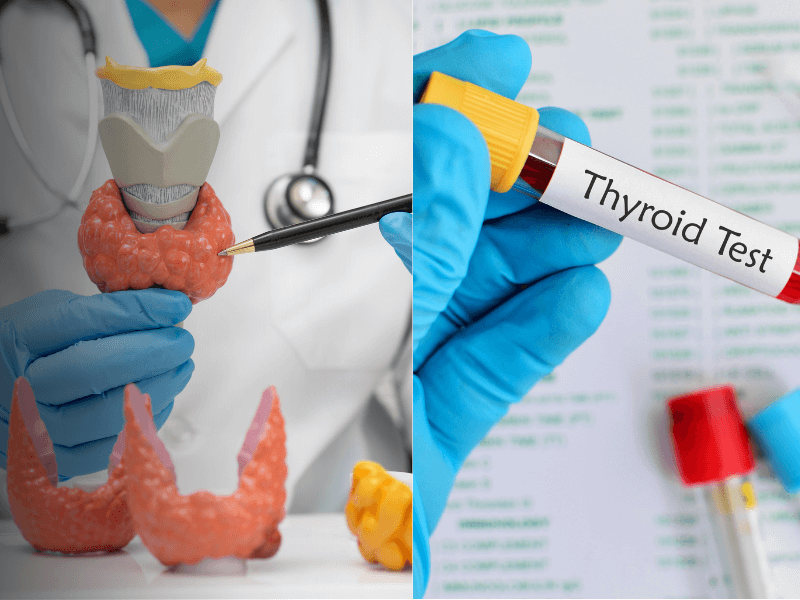
If you’ve ever had blood work done to check your thyroid, you’ve probably seen a confusing list of numbers and abbreviations—TSH, T3, T4, Free T4, sometimes even thyroid antibodies. For many patients, these results raise more questions than answers.
What do these values actually mean?
Why can you still feel unwell even when your labs look “normal”?
And how do endocrinologists use these results to diagnose and manage thyroid disorders?
At Florida Endocrinology and Diabetes Center, we believe patients make better health decisions when they truly understand their bodies. This guide breaks down thyroid lab tests in clear, simple terms—without oversimplifying the science behind them.
Why Thyroid Testing Matters
Your thyroid is a small, butterfly-shaped gland located at the base of your neck, but its impact on your body is anything but small. It plays a central role in regulating:
- Metabolism and energy levels
- Heart rate and blood pressure
- Body temperature
- Weight changes
- Mood and cognitive function
- Menstrual cycles and fertility
When thyroid hormone levels are too high or too low, nearly every system in your body can be affected. Blood tests are the most reliable way to detect thyroid dysfunction early—often before symptoms become severe.
The Thyroid Hormone System: A Quick Overview
To understand thyroid lab results, it helps to know how the system works.
- The hypothalamus (in the brain) senses thyroid hormone levels
- It signals the pituitary gland to release TSH (thyroid-stimulating hormone)
- TSH tells the thyroid gland to produce T4 (thyroxine) and T3 (triiodothyronine)
- T4 is converted into active T3 in tissues throughout the body
This feedback loop is why a change in one value often affects the others.
TSH (Thyroid-Stimulating Hormone): The Master Regulator
TSH is usually the first test doctors order—and for good reason.
What TSH Does
TSH is produced by the pituitary gland and acts as a messenger. It tells your thyroid how much hormone to make.
- High TSH → Your thyroid is underactive
- Low TSH → Your thyroid is overactive
Normal TSH Range
Most labs list a normal range of approximately 0.4–4.5 mIU/L, but optimal levels can vary based on age, pregnancy, and individual health factors.
What High TSH May Indicate
- Hypothyroidism
- Hashimoto’s thyroiditis
- Inadequate thyroid medication dose
What Low TSH May Indicate
- Hyperthyroidism
- Graves’ disease
- Excess thyroid hormone medication
At Florida Endocrinology and Diabetes Center, we evaluate TSH in context, not in isolation—because TSH alone does not always tell the full story.
T4 (Thyroxine): The Storage Hormone
T4 is the primary hormone produced by the thyroid gland. However, it is largely inactive until it’s converted into T3.
Total T4 vs. Free T4
- Total T4 includes hormone bound to proteins
- Free T4 measures the hormone available for use by the body
Free T4 is often more clinically useful.
What Abnormal T4 Levels Mean
- Low Free T4: Suggests hypothyroidism
- High Free T4: Suggests hyperthyroidism
A normal T4 with abnormal TSH may indicate early or subclinical thyroid disease, which requires expert interpretation.
T3 (Triiodothyronine): The Active Hormone
T3 is the most biologically active thyroid hormone—it directly affects how your cells function.
Why T3 Matters
Even if T4 levels are normal, inadequate conversion to T3 can cause persistent symptoms such as:
- Fatigue
- Brain fog
- Cold intolerance
- Weight gain
Total T3 vs. Free T3
- Total T3 measures both bound and unbound hormone
- Free T3 reflects active hormone availability
T3 testing is especially helpful when evaluating hyperthyroidism or persistent symptoms despite normal TSH and T4 levels.
How Lab Results Work Together
Rather than focusing on a single number, endocrinologists assess patterns:
Condition | TSH | T4 | T3 |
Hypothyroidism | High | Low | Low |
Hyperthyroidism | Low | High | High |
Subclinical Hypothyroidism | High | Normal | Normal |
Central Hypothyroidism | Low/Normal | Low | Low |
This comprehensive view helps avoid misdiagnosis and inappropriate treatment.
Why “Normal” Labs Don’t Always Mean You Feel Normal
One of the most common frustrations we hear from patients is:
“My labs are normal, but I still feel terrible.”
Possible reasons include:
- Early thyroid disease not yet reflected in labs
- Poor T4-to-T3 conversion
- Autoimmune thyroid conditions
- Other hormonal imbalances (adrenal, pituitary, or sex hormones)
- Vitamin deficiencies (iron, B12, vitamin D)
This is why individualized care matters. At Florida Endocrinology and Diabetes Center, we treat patients—not just numbers.
Additional Thyroid Tests You May See
Depending on symptoms and history, your provider may also order:
Thyroid Antibodies
- TPO antibodies: Often elevated in Hashimoto’s disease
- TSI antibodies: Associated with Graves’ disease
Thyroglobulin
Used mainly in thyroid cancer monitoring.
Reverse T3
Occasionally used to assess hormone conversion issues.
These tests help uncover the cause of thyroid dysfunction, not just the hormone levels.
When Should You See an Endocrinologist?
You should consider specialist care if you have:
- Persistent thyroid symptoms despite treatment
- Abnormal labs with unclear diagnosis
- Pregnancy or fertility concerns
- Thyroid nodules or goiter
- Autoimmune thyroid disease
Our endocrinology team provides advanced diagnostic evaluation and personalized treatment plans tailored to each patient’s needs.
How Thyroid Conditions Are Managed
Treatment depends on the type and severity of thyroid dysfunction:
- Hypothyroidism: Thyroid hormone replacement
- Hyperthyroidism: Medications, radioactive iodine, or surgery
- Autoimmune conditions: Long-term monitoring and symptom management
Ongoing lab monitoring ensures treatment remains safe and effective over time.
Key Takeaways
- TSH, T3, and T4 work together to regulate metabolism and overall health
- Abnormal levels can affect energy, weight, mood, and heart health
- Lab values must be interpreted in clinical context
- Persistent symptoms deserve further evaluation
- Expert endocrinology care can make a significant difference
Expert Thyroid Care in Florida
At Florida Endocrinology and Diabetes Center, we specialize in comprehensive thyroid evaluation and management—using evidence-based medicine with a patient-centered approach. Whether you’re newly diagnosed or struggling with ongoing symptoms, our team is here to help you feel your best.
Schedule a consultation today to take control of your thyroid health with confidence.