
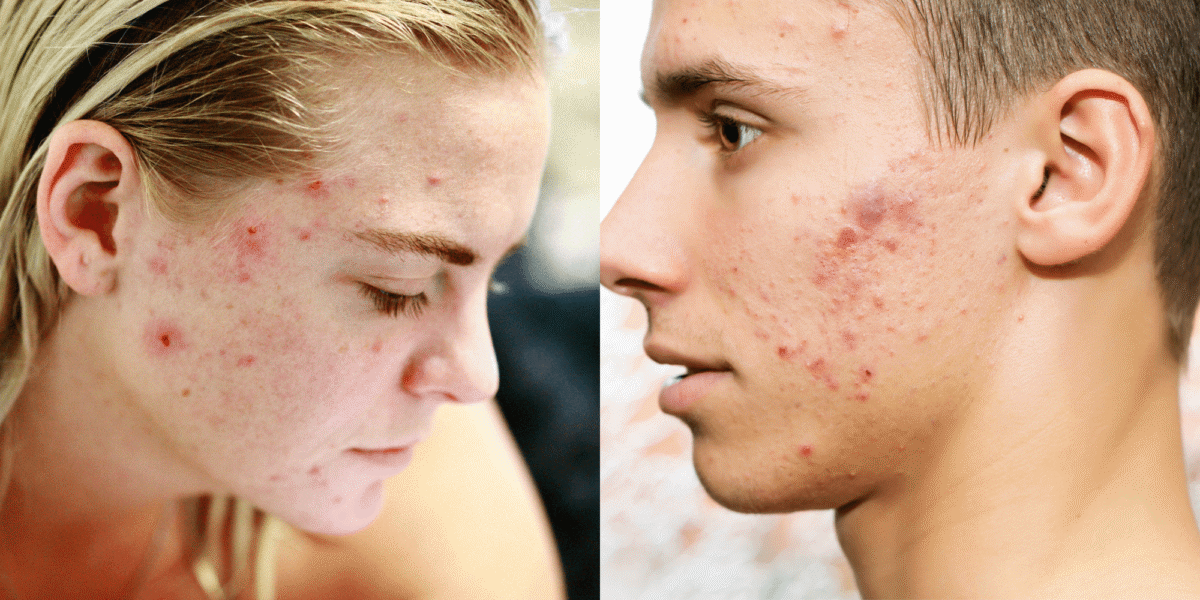
Adult acne can be frustrating enough on its own. But when breakouts become deep, painful, persistent cysts, continue well beyond the teenage years, or suddenly appear in adulthood, you may start wondering whether something deeper is going on.
For some adults, particularly women, cystic acne can have a hormonal component.
That doesn’t necessarily mean you have a hormone disorder. Acne is a complex skin condition influenced by oil production, clogged pores, inflammation, bacteria, genetics, and hormones. However, when acne is persistent, severe, or accompanied by other hormonal symptoms, an endocrinologist may be able to identify an underlying endocrine condition contributing to your breakouts.
At Florida Endocrinology & Diabetes Center, our endocrinology specialists evaluate patients whose acne may be associated with hormonal or metabolic conditions and work alongside dermatology and other specialists when appropriate.
So, when should you see an endocrinologist for adult cystic acne, and what can they actually do to help?
What Is Adult Cystic Acne?
Cystic acne is one of the more severe forms of acne.
Instead of superficial blackheads or small pimples, cystic acne can produce large, deep, painful, inflamed bumps beneath the skin. These lesions can remain for weeks and may leave scars or long-lasting discoloration.
Adult acne can occur in both men and women, but it is particularly common among adult women. According to the American Academy of Dermatology (AAD), adult acne can persist into the 30s, 40s, and 50s and may even begin for the first time during adulthood. Hormonal fluctuations can contribute, particularly around menstruation, pregnancy, perimenopause, and menopause.
Cystic acne may appear on the:
- Lower face
- Chin
- Jawline
- Neck
- Chest
- Back
- Shoulders
When acne repeatedly appears around the jawline, chin, and lower face, a hormonal contribution may be worth considering, especially when breakouts follow a predictable menstrual pattern.
However, the location of acne alone cannot diagnose a hormonal disorder.
Why Can Hormones Cause Adult Acne?
Hormones called androgens including testosterone, can stimulate the skin’s sebaceous glands.
These glands produce sebum, an oily substance that helps protect the skin. When androgen activity increases or the skin becomes more sensitive to androgens, sebaceous glands can produce more oil.
Excess oil can combine with dead skin cells and contribute to clogged pores. Inflammation can then produce acne lesions.
This is one reason hormonal fluctuations can contribute to acne in women.
Hormonal changes may occur during:
- The menstrual cycle
- Pregnancy
- Perimenopause
- Menopause
- Certain medical conditions
- Use of certain medications
- Hormonal therapies
The AAD notes that fluctuating hormone levels are one potential contributor to adult acne, particularly in women.
But an important distinction is necessary:
Having hormonal acne does not automatically mean you have a hormonal disease.
Many women with adult acne have normal hormone levels. The skin can simply be particularly sensitive to normal androgen activity.
When Should Adult Cystic Acne Raise a Hormonal Concern?
An endocrinology evaluation may be particularly useful when acne occurs alongside other signs of hormone imbalance.
Pay attention if your cystic acne is accompanied by:
Irregular or absent periods
Changes in menstrual cycles can be an important clue to an underlying hormonal condition, particularly when combined with acne or increased facial hair.
Excess facial or body hair
New or increased coarse hair growth on the chin, upper lip, chest, abdomen, or other areas can suggest androgen excess, particularly when it develops relatively quickly.
Thinning scalp hair
Hair thinning at the scalp, especially when accompanied by acne or increased body hair, can also be associated with androgen excess.
Unexplained weight changes
Weight gain can occur alongside certain hormonal and metabolic disorders, including polycystic ovary syndrome (PCOS).
However, weight gain is not required to have PCOS. The Endocrine Society notes that women with normal weight can also have PCOS.
Darkened skin around the neck
Dark, thickened, velvety skin, known as acanthosis nigricans can be associated with insulin resistance.
Difficulty becoming pregnant
Irregular ovulation associated with hormonal disorders can sometimes contribute to infertility.
When several of these symptoms occur alongside adult cystic acne, it may be appropriate to investigate whether an endocrine condition is contributing.
Could PCOS Be Causing Your Cystic Acne?
One of the most common endocrine conditions considered when adult acne occurs alongside signs of androgen excess is polycystic ovary syndrome (PCOS).
PCOS is a complex hormonal and metabolic disorder affecting women of reproductive age.
One of its key features is androgen excess. The Endocrine Society notes that androgen excess can contribute to clinical signs such as acne, increased facial or body hair, and scalp hair thinning. PCOS can also involve irregular or absent menstrual cycles and insulin resistance.
However, having acne does not mean you have PCOS.
PCOS is diagnosed based on a combination of clinical history, physical findings, laboratory testing, and sometimes imaging. Other conditions that can produce similar symptoms need to be excluded.
An endocrinologist can help determine whether your symptoms warrant an evaluation for PCOS or another endocrine condition.
What Does an Endocrinologist Actually Do for Adult Cystic Acne?
You may wonder why you would see an endocrinologist rather than simply a dermatologist.
The answer is that the two specialties approach the problem from different angles.
A dermatologist focuses primarily on the skin and acne itself.
An endocrinologist evaluates whether hormones, metabolism, or an endocrine disorder may be contributing to the acne.
If your acne appears to have a hormonal component, an endocrinologist can investigate the underlying cause rather than simply treating the skin lesions.
The evaluation may include:
- Reviewing your menstrual history
- Asking when your acne began
- Looking for patterns in your breakouts
- Reviewing medications and supplements
- Assessing changes in body or facial hair
- Evaluating scalp hair loss
- Reviewing weight changes
- Assessing signs of insulin resistance
- Reviewing your family history
- Ordering targeted hormone or metabolic testing when appropriate
This can help answer an important question:
Is your acne simply adult acne, or is it a visible sign of an underlying hormonal condition?
What Hormone Tests Might an Endocrinologist Order?
Not everyone with acne needs hormone testing.
If your periods are regular and you have no other signs of androgen excess, extensive endocrine testing may not provide useful information.
However, testing may be appropriate when acne occurs alongside symptoms suggesting hormonal dysfunction.
Depending on your individual situation, your endocrinologist may consider tests such as:
Total and free testosterone
Testosterone is one of the major androgens associated with acne and other signs of androgen excess.
DHEA-S
Dehydroepiandrosterone sulfate (DHEA-S) is an androgen produced primarily by the adrenal glands.
Elevated levels can sometimes help identify an adrenal contribution to androgen excess.
17-hydroxyprogesterone
This may be considered in selected patients when a less common condition called nonclassic congenital adrenal hyperplasia is suspected.
TSH and thyroid testing
Thyroid disorders can sometimes cause menstrual abnormalities and other symptoms that overlap with PCOS or other endocrine conditions.
Prolactin
If menstrual irregularities or other symptoms suggest a pituitary or hormonal disorder, prolactin may be evaluated.
Glucose and A1C
Because insulin resistance and abnormal glucose metabolism can occur with PCOS, your physician may evaluate blood sugar.
Lipid testing
PCOS can be associated with cardiometabolic risk factors, so cholesterol and triglyceride testing may also be appropriate in patients with PCOS.
The important point is that hormone testing should be individualized.
More testing isn’t always better. Your endocrinologist can determine which laboratory tests make sense based on your symptoms and medical history.
What If Your Hormone Tests Are Normal?
This is an important possibility.
You can have severe adult cystic acne even when your hormone levels are completely normal.
In some women, the skin may simply be more sensitive to normal androgen levels.
This means that normal blood tests do not necessarily mean your acne isn’t hormonally influenced.
It also means that an endocrinologist may determine that there is no underlying endocrine disorder and recommend that you continue treatment with a dermatologist.
The goal isn’t to find a hormonal disorder at all costs.
The goal is to determine whether one exists.
If your endocrine evaluation is normal, your acne can still be treated effectively through appropriate dermatologic care.
Can an Endocrinologist Treat Hormonal Acne?
Depending on the cause and your individual circumstances, an endocrinologist may be involved in the medical management of hormonal conditions contributing to acne.
However, dermatologists are generally the specialists most directly focused on acne treatment.
The AAD’s 2024 acne guidelines recommend several evidence-based treatments for acne, including topical retinoids, benzoyl peroxide, certain oral antibiotics, isotretinoin for appropriate patients, combined oral contraceptives, and spironolactone.
For women with hormonal acne, combined oral contraceptives and spironolactone may be considered when appropriate.
These medications are not suitable for everyone and require an evaluation of medical history, risks, medications, pregnancy considerations, and other factors.
How Does Spironolactone Help Hormonal Acne?
Spironolactone is a medication that can reduce the effects of androgens.
Although it was originally developed as a diuretic and is commonly used for conditions such as high blood pressure, it has also been used for many years to treat hormonal acne in women.
The AAD notes that spironolactone can be particularly effective for deep, tender acne affecting the lower face, jawline, or neck.
It may be considered when:
- Acne repeatedly returns
- Breakouts follow a hormonal pattern
- Acne affects the jawline or lower face
- Standard treatments haven’t provided adequate control
- There are other signs suggesting androgen sensitivity
Spironolactone isn’t appropriate for everyone.
It can affect potassium levels and blood pressure and may cause side effects such as menstrual irregularities, breast tenderness, dizziness, or increased urination. It also requires particular attention to pregnancy because of potential fetal risks.
Your physician will determine whether it is appropriate for you and what monitoring is necessary.
What About Birth Control Pills for Hormonal Acne?
Certain combined oral contraceptives can also help manage acne in women.
They work partly by reducing androgen activity and can be particularly useful when acne occurs alongside menstrual irregularities or when contraception is also desired.
The AAD includes combined oral contraceptives among its recommended systemic acne treatments and notes that some oral contraceptives are FDA-approved specifically for acne.
However, birth control pills aren’t appropriate for every woman.
Your healthcare provider will consider factors such as:
- Age
- Blood pressure
- Smoking
- Migraine history
- History of blood clots
- Cardiovascular risk
- Other medications
- Pregnancy plans
Never start hormonal medication solely because you believe your acne is hormonal.
It should be selected based on your complete medical history.
What Role Does a Dermatologist Play?
Seeing an endocrinologist doesn’t mean you should stop seeing a dermatologist.
In fact, the best approach may involve both specialists.
A dermatologist can treat the skin directly using therapies such as:
- Topical retinoids
- Benzoyl peroxide
- Azelaic acid
- Salicylic acid
- Topical antibiotics
- Oral antibiotics when appropriate
- Hormonal therapies
- Isotretinoin for severe or treatment-resistant acne
- Corticosteroid injections for certain large, painful lesions
The AAD’s current guidelines recommend a range of topical and systemic treatments depending on acne severity and individual circumstances.
An endocrinologist, meanwhile, can investigate whether there is an underlying hormonal or metabolic contributor.
Together, these approaches can address both the skin and the potential underlying cause.
Why Treating the Underlying Hormonal Problem Matters
If acne is associated with an endocrine condition such as PCOS, treating only the skin may not address the entire health picture.
For example, PCOS can be associated with:
- Androgen excess
- Irregular menstrual cycles
- Infertility
- Insulin resistance
- Prediabetes
- Type 2 diabetes
- Abnormal cholesterol
- Other cardiometabolic risks
The Endocrine Society emphasizes that PCOS is not simply an ovarian condition; it can have important reproductive and metabolic implications.
This is why identifying an underlying condition can be valuable even when the original reason for seeking medical care was acne.
The acne may be one visible clue to a broader hormonal or metabolic issue.
Does Adult Cystic Acne Always Mean You Have a Hormone Imbalance?
No.
This is perhaps the most important takeaway.
Adult acne is common, and hormonal fluctuations can contribute without there being a diagnosable endocrine disorder.
Acne can be influenced by:
- Genetics
- Sebum production
- Skin-cell turnover
- Inflammation
- Bacteria
- Hormonal fluctuations
- Certain medications
- Cosmetics and skin-care products
- Stress and other lifestyle factors
The AAD notes that adult acne can develop for several reasons and is particularly common in women during periods of hormonal fluctuation.
So don’t panic if you suddenly develop acne in adulthood.
But if your acne is severe, cystic, persistent, or accompanied by other hormonal symptoms, it deserves a proper evaluation.
When Should You See an Endocrinologist for Acne?
Consider asking your primary care doctor or dermatologist about an endocrinology evaluation if your adult cystic acne occurs alongside:
- Irregular or absent periods
- New facial or body hair
- Scalp hair thinning
- Unexplained weight gain
- Difficulty becoming pregnant
- Darkened, thickened skin around the neck or body folds
- Symptoms suggesting insulin resistance
- Rapid development of severe acne
- Other signs of androgen excess
Rapid or significant development of androgen-related symptoms deserves particular attention.
The Endocrine Society recommends androgen evaluation in women with clinically significant hirsutism and provides guidance for evaluating possible hyperandrogenic endocrine disorders.
Your physician can determine whether hormone testing or further investigation is warranted.
Can Diet Cause Cystic Acne?
Patients often ask whether they need to completely eliminate dairy, sugar, gluten, or other foods to clear their acne.
The answer isn’t that simple.
The AAD’s updated acne guidelines found insufficient evidence to make recommendations for dietary changes as an acne treatment.
That doesn’t mean diet has no relationship to skin health.
It means that there isn’t enough evidence to recommend one universal acne diet for everyone.
Instead of eliminating multiple food groups based on internet advice, focus on an overall nutritious eating pattern and discuss persistent acne with an appropriate healthcare professional.
If you have PCOS or insulin resistance, your endocrinologist may also recommend nutritional and lifestyle strategies aimed at improving your broader metabolic health.
Don’t Pick or Squeeze Cystic Acne
Deep cystic acne can be painful and tempting to squeeze.
Try not to.
Manipulating deep acne lesions can increase inflammation and raise the risk of scarring and discoloration.
If you have a particularly large, painful cyst, dermatologists may have treatment options that can provide more rapid relief. The AAD’s acne guidelines include intralesional corticosteroid injections as an option for certain larger acne bumps.
If your acne is leaving scars, don’t wait until the scarring becomes extensive before seeking professional treatment.
The Bottom Line: Adult Cystic Acne May Be More Than a Skin Problem
Adult cystic acne isn’t something you have to simply accept.
For some people, it is primarily a dermatologic condition. For others particularly women with irregular periods, excess facial hair, scalp hair thinning, or metabolic symptoms—it may be a sign that hormones deserve a closer look.
An endocrinologist can help determine whether conditions such as PCOS, androgen excess, thyroid disease, insulin resistance, or another endocrine disorder may be contributing.
Importantly, not every person with adult acne needs hormone testing, and normal hormone levels do not mean your acne isn’t real or treatable.
At Florida Endocrinology & Diabetes Center, our endocrinology specialists take a comprehensive approach to patients whose adult acne may have a hormonal or metabolic component. When appropriate, we can evaluate hormone levels, thyroid function, glucose metabolism, and other potential contributors and coordinate care with dermatology.
If your cystic acne keeps returning despite treatment or if it comes with irregular periods, unwanted facial hair, hair thinning, or unexplained weight changes, don’t just keep changing your skincare routine. Find out whether there may be an underlying hormonal reason.
Schedule an evaluation with Florida Endocrinology & Diabetes Center to discuss whether your adult cystic acne could be connected to your hormones or metabolic health.
This article is intended for educational purposes only and should not replace personalized medical advice, diagnosis, or treatment from a qualified healthcare professional.