
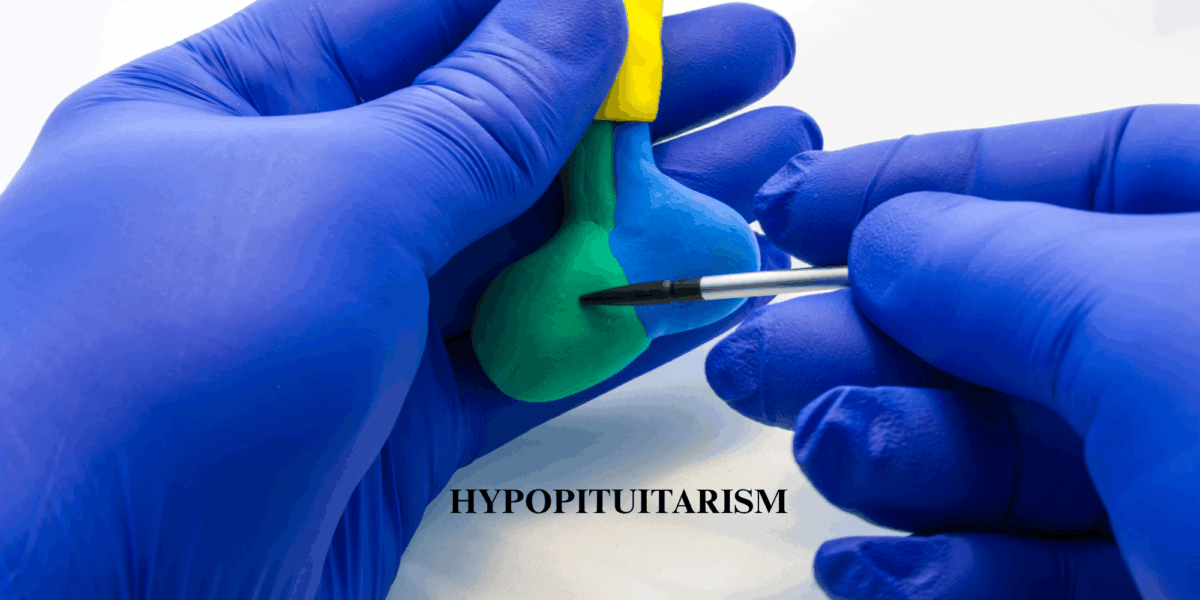
The human endocrine system is a finely tuned network of glands that produce hormones, regulating everything from metabolism and growth to blood pressure and reproduction. At the absolute epicenter of this complex network sits a tiny, pea-sized organ located at the base of the brain: the pituitary gland. Often referred to as the “master gland,” it sends vital chemical signals to almost every other hormone-producing organ in your body.
When the pituitary gland fails to function properly, the ripple effect across your health can be profound. This condition is known as hypopituitarism.
At Florida Endocrinology & Diabetes Centre, our mission is to deliver comprehensive, expert-level care to patients navigating complex hormonal disorders across the Greater Tampa Bay area. If you or a loved one are experiencing unexplained fatigue, sudden weight fluctuations, or a general sense that your body’s internal thermostat is broken, understanding how hypopituitarism works is a critical first step toward reclaiming your health.
What is Hypopituitarism?
Hypopituitarism is a rare, complex disorder characterized by an underactive pituitary gland that fails to produce one, several, or all of its essential hormones. When there is a total absence of all pituitary hormones, the condition is referred to as panhypopituitarism.
Because the pituitary gland acts as a central control panel, a shortage of its hormones creates a domino effect. The master gland stops sending “instructions” to target organs like the thyroid, adrenal glands, and gonads (ovaries or testes). As a result, those peripheral glands stop producing their own hormones, resulting in systemic biochemical deficiencies.
To fully grasp the impact of this condition, it helps to understand the specific chemical messengers the pituitary gland is responsible for secreting into your bloodstream:
- Adrenocorticotropic Hormone (ACTH): Stimulates the adrenal glands to produce cortisol—commonly known as the “stress hormone”—which is vital for maintaining blood pressure, managing blood sugar, and regulating the immune system.
- Thyroid-Stimulating Hormone (TSH): Signals the thyroid gland to produce thyroxine ($T_4$) and triiodothyronine ($T_3$), which control your metabolic rate, energy production, and internal temperature.
- Luteinizing Hormone (LH) & Follicle-Stimulating Hormone (FSH): Collectively known as gonadotropins, these hormones regulate reproductive health, estrogen and progesterone production in women, and testosterone and sperm production in men.
- Growth Hormone (GH): Essential for childhood physical growth and maintaining healthy muscle mass, bone density, and body fat distribution in adults.
- Prolactin: Stimulates milk production in women after childbirth.
- Anti-Diuretic Hormone (ADH) / Vasopressin: Produced in the hypothalamus and stored/released by the posterior pituitary, ADH manages fluid balance and prevents dehydration by signaling the kidneys to retain water.
Recognizing the Symptoms: The Hidden Impostor
One of the greatest challenges surrounding hypopituitarism is that its symptoms rarely emerge all at once. Instead, they develop gradually, mimicking other common ailments such as chronic fatigue syndrome, clinical depression, early menopause, or age-related slowing of the metabolism.
The specific symptoms you experience depend entirely on which specific hormones are deficient.
ACTH Deficiency (Secondary Adrenal Insufficiency)
A drop in ACTH limits your body’s ability to handle physical or emotional stress. This can manifest as severe fatigue, low blood pressure (hypotension), dizziness upon standing, unexplained weight loss, and chronic nausea or abdominal discomfort.
TSH Deficiency (Secondary Hypothyroidism)
Without adequate TSH signaling, your metabolism slows dramatically. Symptoms mirror classic underactive thyroid issues: heavy intolerance to cold, sluggishness, weight gain despite no changes in diet, dry skin, and muscle weakness.
LH and FSH Deficiency (Hypogonadotropic Hypogonadism)
In women, a lack of these hormones can cause irregular menstrual cycles, a complete cessation of periods (amenorrhea), hot flashes, vaginal dryness, and infertility. In men, it leads to erectile dysfunction, a diminished sex drive, decreased facial or body hair growth, and a reduction in muscle mass.
Growth Hormone Deficiency
While highly noticeable in children through stunted growth patterns, an adult growth hormone deficiency is more subtle. It frequently leads to an altered body composition marked by increased abdominal fat, reduced bone mineral density, diminished muscle strength, and a persistent state of low energy or social isolation.
Root Causes of Pituitary Failure
Hypopituitarism is rarely an isolated primary condition; it is almost always the consequence of an underlying structural event, trauma, or disease process that damages the pituitary tissue or the hypothalamus (the region of the brain immediately above it that controls pituitary function).
Pituitary Tumors and Adenomas
The single most frequent cause of hypopituitarism is the physical compression of the gland by a benign (non-cancerous) tumor called a pituitary adenoma. As these masses slowly expand within the rigid bony structure of the skull base, they compress and damage the delicate blood vessels and hormone-producing cells surrounding them.
Surgical or Radiation Trauma
In many instances, the treatment required to eliminate a pituitary tumor—such as neurosurgery or targeted cranial radiation therapy—inadvertently compromises the surrounding healthy tissue, leading to a delayed onset of hypopituitarism months or years following treatment.
Severe Traumatic Brain Injury (TBI)
Significant impacts to the head, such as those sustained in severe automobile accidents or high-impact sports, can sever the delicate infundibular stalk connecting the brain to the pituitary gland, immediately cutting off vital communication pathways.
Circulatory and Ischemic Events
Severe blood loss or a sudden drop in blood pressure during childbirth can starve the enlarged pituitary gland of oxygen, a rare but serious condition known as Sheehan’s Syndrome. Similarly, spontaneous bleeding into the gland (pituitary apoplexy) represents a critical medical emergency that can wipe out hormonal function instantaneously.
The Path to an Accurate Diagnosis
Because the symptoms of hypopituitarism blend seamlessly with dozens of other common conditions, obtaining a timely, precise diagnosis requires specialized clinical acumen. At Florida Endocrinology & Diabetes Centre, our board-certified endocrinologists utilize a precise diagnostic protocol:
Baseline Static Blood Panels
Initial lab work measures peripheral hormone levels along with their corresponding pituitary stimulating hormones simultaneously. For example, testing a low free $T_4$ level in the presence of a paradoxically “normal” or low TSH points directly to a central pituitary problem rather than an isolated thyroid disease.
Dynamic Stimulation Testing
Because certain hormones like cortisol and growth hormone fluctuate wildly throughout the day, a single blood draw may not tell the whole story. We often perform dynamic testing, where a specific compound is administered under strict clinical supervision to evaluate whether your pituitary gland can respond to an artificial stimulus. If hormone levels fail to rise during this test, a deficiency is confirmed.
Magnetic Resonance Imaging (MRI)
If blood and stimulation tests confirm a pituitary hormone deficiency, a high-resolution MRI of the brain is performed. This imaging allows our specialists to view the structural integrity of the sella turcica (the bony cradle of the pituitary), ruling out space-occupying tumors, cysts, or anatomical changes.
Modern Treatment Paradigms: Hormone Replacement Therapy
Managing hypopituitarism is highly structured and focuses on replacing the specific hormones your body can no longer manufacture on its own. Rather than using pituitary hormones directly (which are difficult to administer and unstable), the standard of care involves replacing the end-organ hormones.
Treatment is typically lifelong and tailored precisely to match your body’s natural metabolic rhythms:
Deficient Pituitary Hormone | Standard Replacement Medication | Mode of Administration | Clinical Goal |
ACTH | Hydrocortisone or Prednisone | Oral tablets (split doses daily) | Replicates natural circadian cortisol patterns |
TSH | Levothyroxine ($T_4$) | Oral tablet (taken on an empty stomach) | Normalizes resting metabolic rate and energy |
FSH / LH (Men) | Testosterone | Topical gels, patches, or intramuscular injections | Restores lean muscle mass, libido, and bone health |
FSH / LH (Women) | Estrogen and Progesterone | Oral pills, transdermal patches, or vaginal rings | Cycles menstruation, treats hot flashes, protects bones |
Growth Hormone | Recombinant Human Growth Hormone | Daily micro-subcutaneous injections | Improves body composition and cardiovascular lipid profiles |
Vasopressin (ADH) | Desmopressin (DDAVP) | Oral tablets or nasal spray | Stabilizes fluid volume and stops excessive urination |
Navigating the Threat of an Adrenal Crisis
For patients suffering from an ACTH deficiency, understanding the mechanics of an adrenal crisis is life-saving. Cortisol is your body’s primary defense mechanism against stress. If you experience a severe systemic illness (like influenza), a major bone fracture, or undergo a surgical procedure, your body requires significantly higher doses of cortisol than your baseline daily prescription.
Our clinical staff provides intensive “stress-dose” training to all patients. This includes instruction on how to temporarily double or triple oral medication during minor illnesses and how to self-administer an emergency intramuscular hydrocortisone injection if severe vomiting prevents the retention of oral pills.
Specialized Localized Care for the Central Gulf Coast
Living with a chronic, life-altering endocrine disorder requires more than a simple pharmacy prescription; it demands accessible, lifelong care managed by clinical experts who understand your history. For residents across Pinellas and Hillsborough counties, seeking care close to home minimizes the stress of long-distance commutes when managing regular blood draws and follow-up adjustments.
At Florida Endocrinology & Diabetes Centre, our multi-site clinic presence ensures that premier medical care is right in your neighborhood. Led by board-certified endocrinologists like Dr. Venkata G. Budharaju, MD (Medical Director of the Diabetes Program at St. Anthony’s Hospital) and Dr. Ajay Varanasi, MD, FACP, FACE, our clinical team blends advanced clinical science with compassionate, patient-centered care.
Whether you reside in the urban center of Tampa, the sprawling communities of Pinellas Park, or the coastal neighborhoods of Saint Petersburg, our doors are open to help you restore hormonal balance and revitalize your quality of life.
Connect with Our Medical Teams
Ready to schedule an evaluation or looking to transition your complex endocrine care to a local specialist? Reach out to our nearest care team directly to establish an appointment.
St. Petersburg Main Medical Center
- Locate Our Center: 5775 5th Ave N, St. Petersburg, FL 33710
- Direct Phone Line: 727-345-5222
- Secure Medical Fax: 727-345-4066
Pinellas Park Community Clinic
- Locate Our Center: 6229 66th St N, Pinellas Park, FL 33781
- Direct Phone Line: 727-623-9913
- Secure Medical Fax: 727-803-6852
South Tampa Specialty Office
- Locate Our Center: 2835 W De Leon St, Ste 102, Tampa, FL 33609
- Direct Phone Line: 813-359-0829
- Secure Medical Fax: 727-345-4066